
News
- Press Release
Share


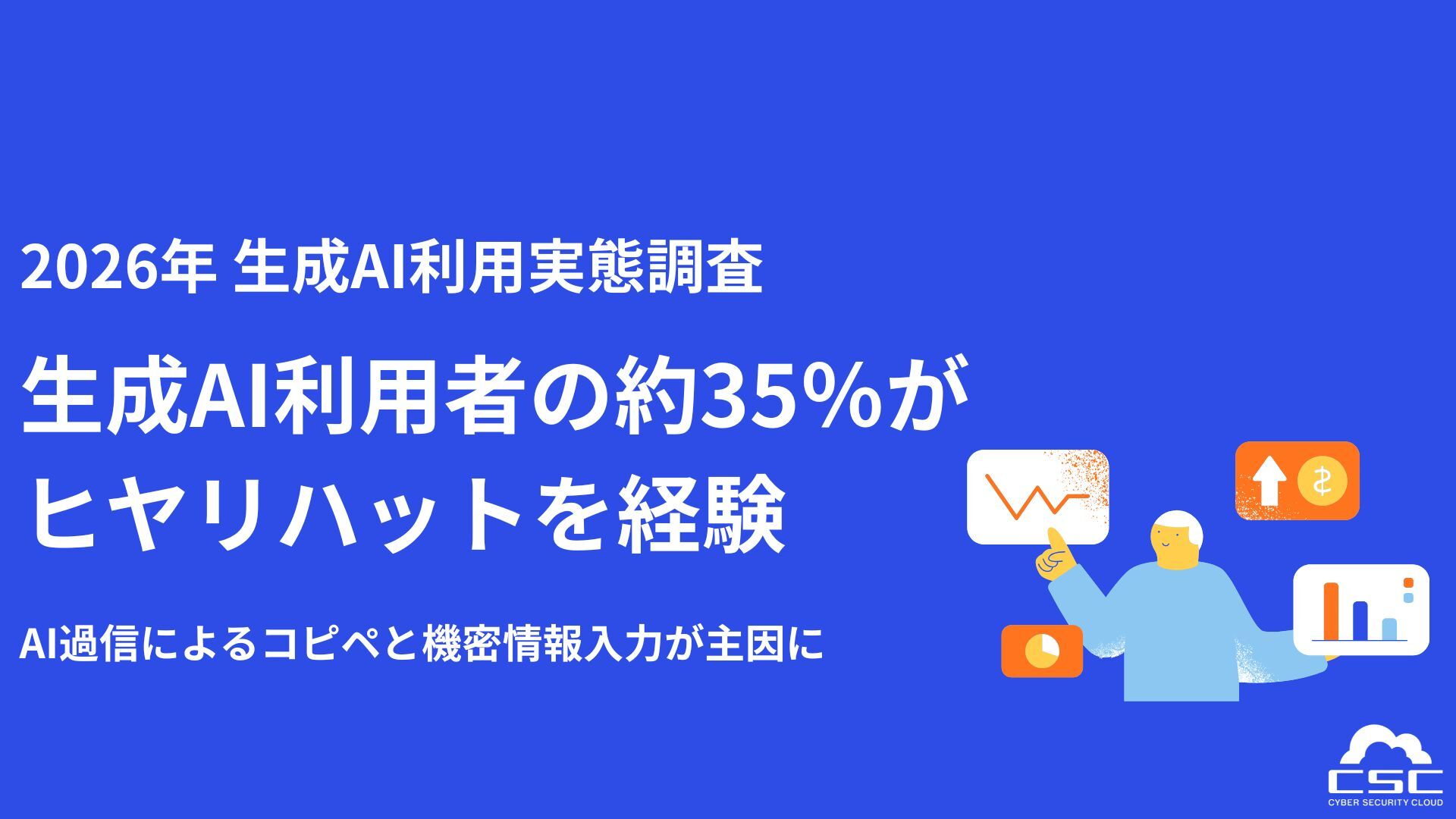
35% of users of AI-generated text have experienced near misses, primarily due to overconfidence in AI, resulting in copy-pasting and inputting confidential information.
Cyber Security Cloud, Inc. (Headquarters: Shinagawa-ku, Tokyo; Representative Director, President and CEO: Toshihiro Koike; hereinafter referred to as "the Company"), a global security manufacturer, conducted a survey on the actual use of generated AI in business, targeting 300 company employees who use PCs daily for work.
■ Survey Summary
1. Over 60% of company employees use AI-generated content for work, and approximately 15% are using it in a "shadow AI" state.
2. More than half of users input internal company documents into the AI generator—including financial and customer information.
3. Approximately 35% of users of generated AI have experienced near misses, and about 1 in 7 have actually caused problems.
*Shadow AI: This refers to employees using AI tools (such as ChatGPT and Gemini) that are not authorized or managed by the company, based on their own judgment, for work purposes.
1. Over 60% of company employees use AI for work, and 15% are using shadow AI.
When we surveyed 300 company employees who use PCs almost every day for work about their use of AI generation tools, it became clear that 67% (201 people) use them in some form.
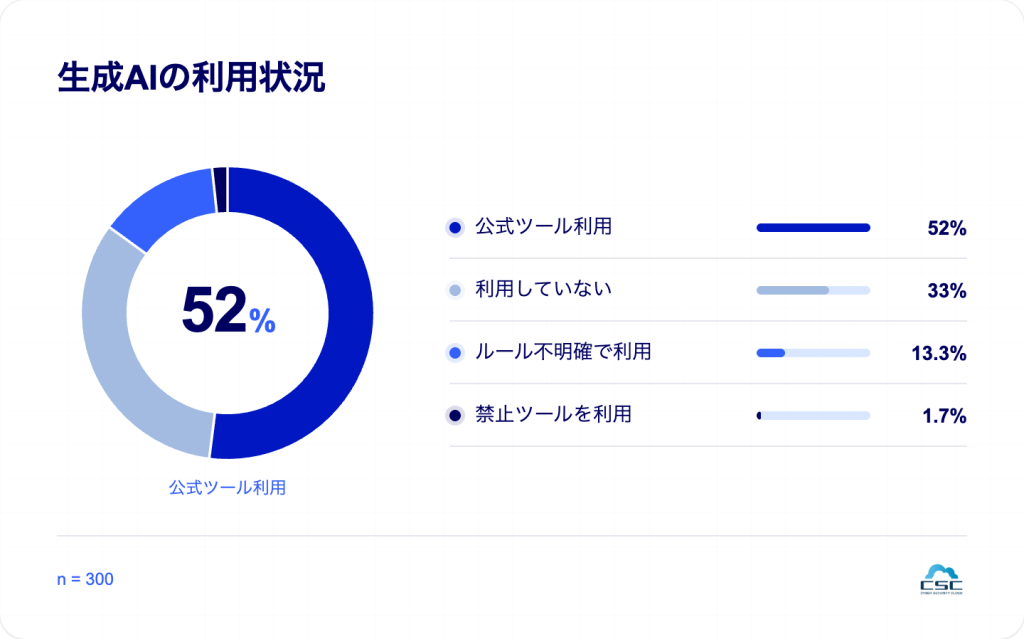
Looking at the breakdown of users, 52% were using tools officially approved by the company, while approximately 13% were using tools without clear company rules, and approximately 2% were using tools not approved by company rules. This revealed that about 15% were in a state of so-called shadow AI.
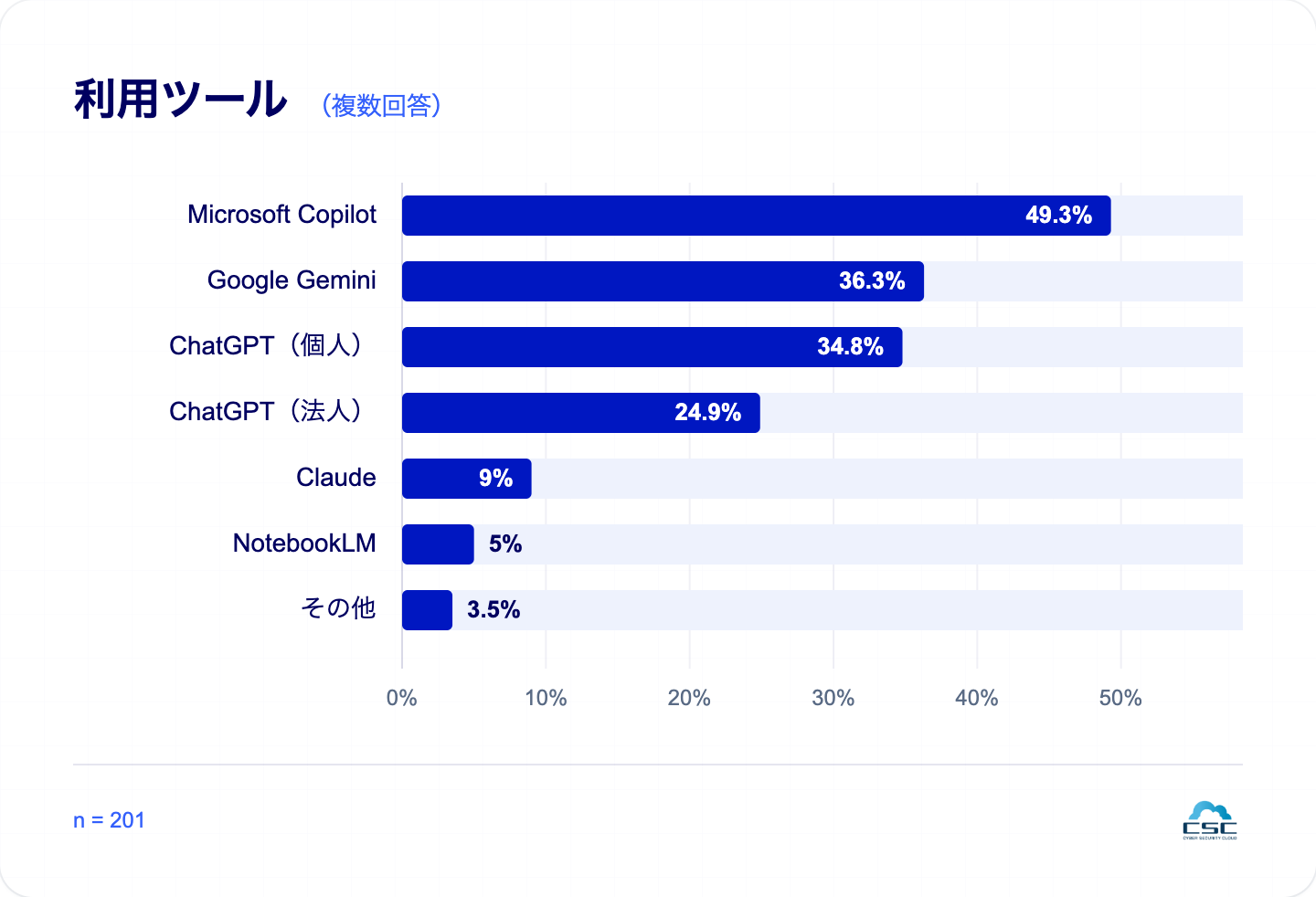
The most frequently used tool was Microsoft Copilot (approximately 49%), followed by Google Gemini (approximately 36%), ChatGPT personal accounts (approximately 35%), and ChatGPT corporate contracts (approximately 25%). While 90% of users accessed the system on company-issued PCs, a significant number also accessed it from personally owned PCs (9%) and personal smartphones (8%).
*Regarding ChatGPT, since the data handling policy differs between individual accounts (free and paid) and corporate contracts, we have categorized and aggregated data based on usage type (individual/corporate) from the perspective of shadow AI.
2. More than half of users input internal company documents into the AI generator—including financial and customer information.
Approximately 20% of users have experience entering financial and sales data, 16% have experience entering customer names and business partner information, 13% have experience entering contracts and legal documents, and 10% have experience entering personal information (names and contact information). It was revealed that approximately 60% of users have experience entering some kind of business information into a data generation AI.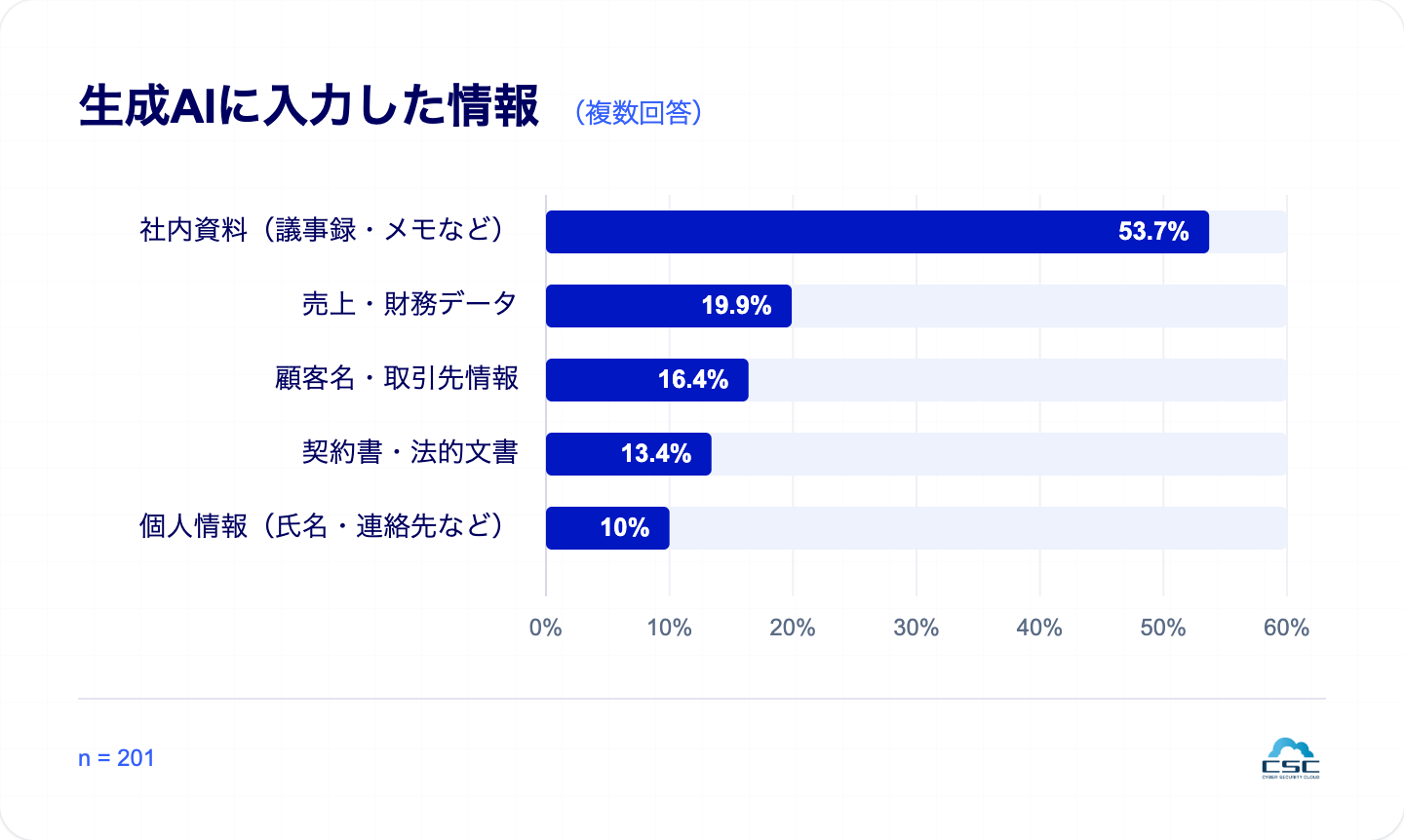
On the other hand, only about 52% of respondents said they are "always aware" of the possibility of information being shared externally, and about 23% of users said they are "not very aware" or "not at all aware" of it, highlighting the disparity in risk perception.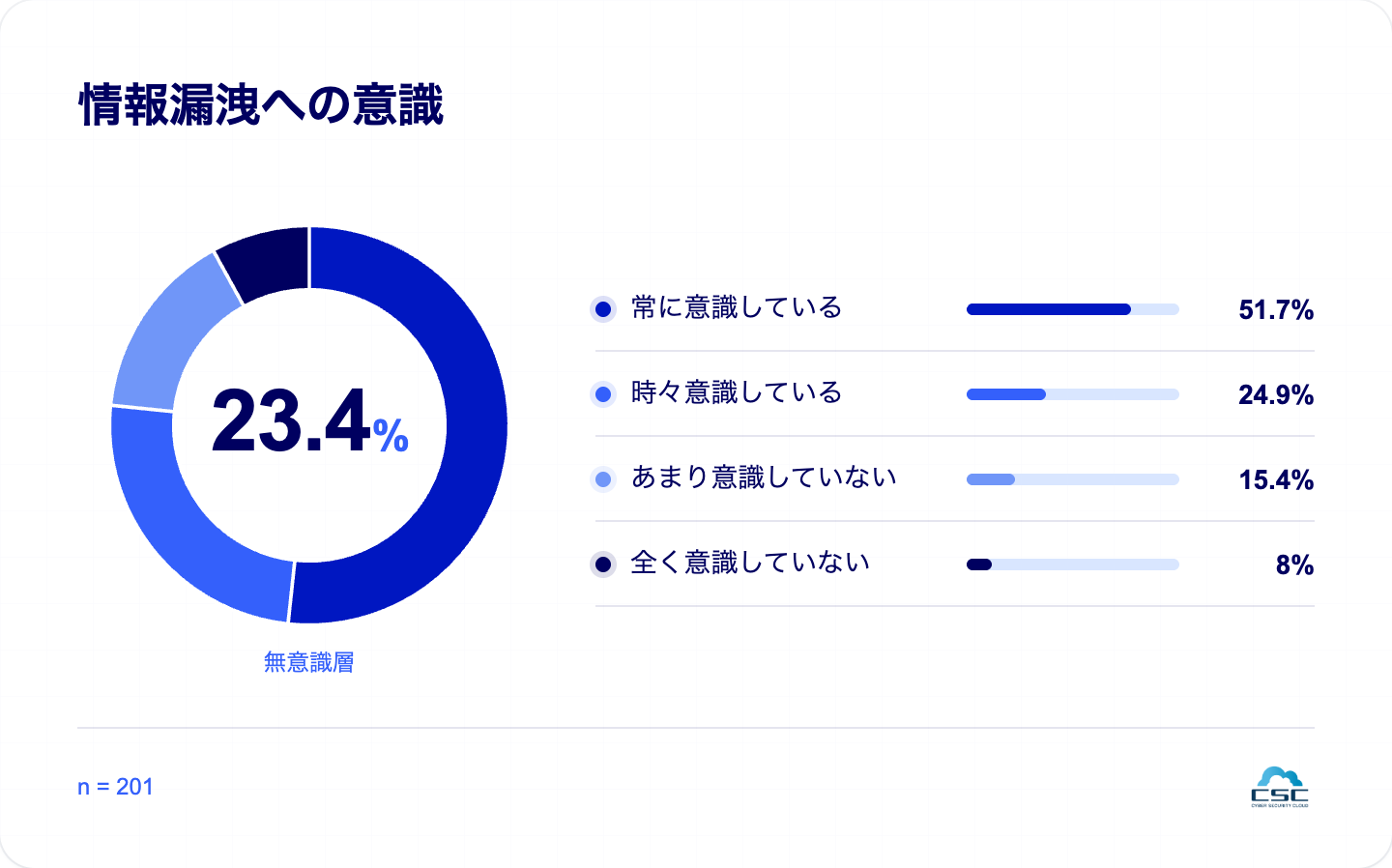
3. Approximately 35% of users of generated AI have experienced near misses, and about 1 in 7 have actually caused problems.
Of the 201 people who use AI generation in their work, approximately 35% reported having had a "near-miss experience." Of those, about 14% said that it had "actually become a problem," clearly indicating that the risks are not limited to potential issues.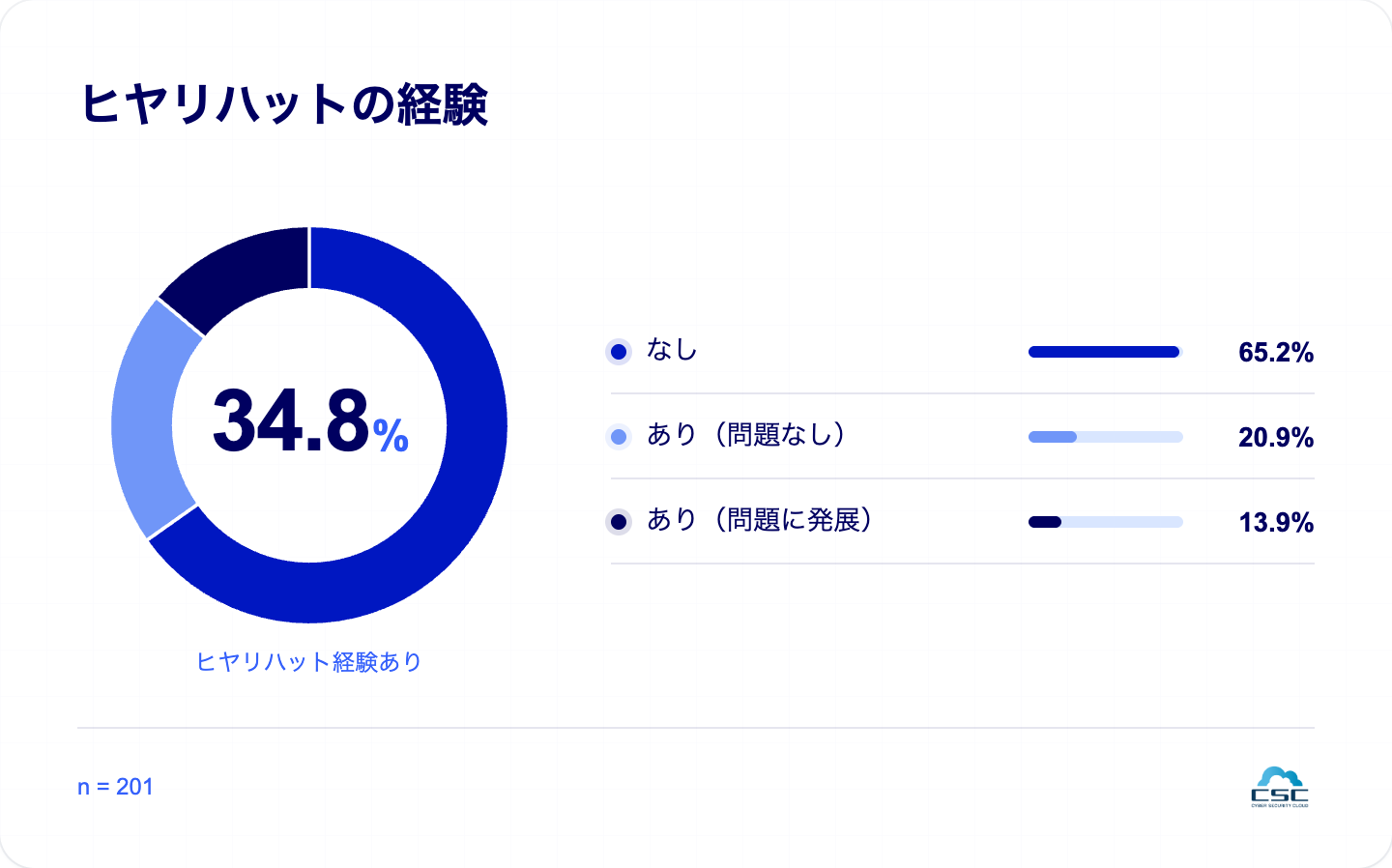
One contributing factor is insufficient verification of the output. Approximately 37% of users responded that they "often or sometimes use the output of the generated AI in their work without checking or correcting it," suggesting that overconfidence in the generated AI is a contributing factor to near misses.
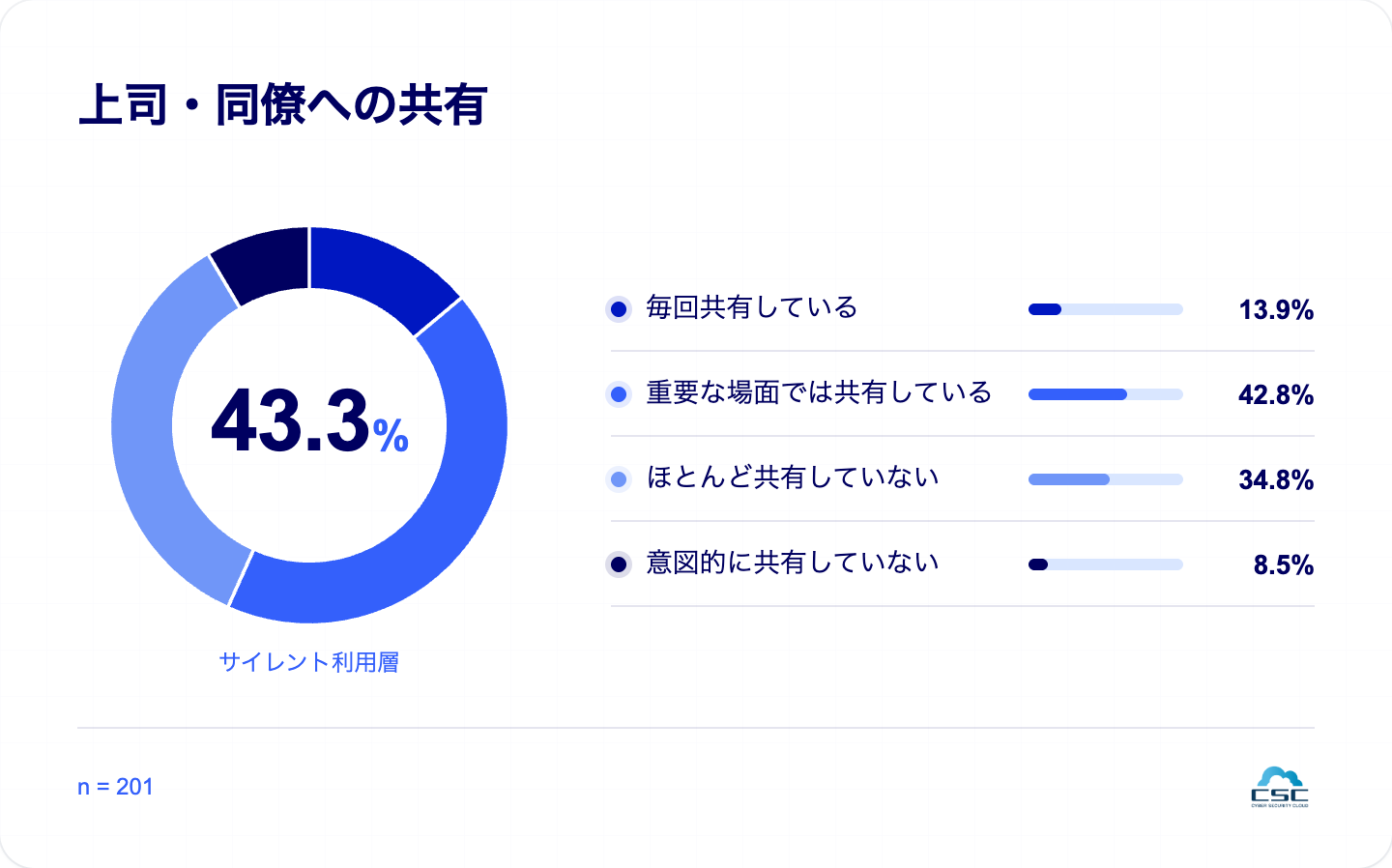
Furthermore, approximately 43% of respondents reported "rarely or intentionally not sharing" the fact that they used AI in their work, highlighting the reality that a lack of transparency in AI use has become commonplace. In addition, approximately 45% of respondents answered that their company has "no" or "doesn't know" rules regarding AI use, revealing the risks of operation left to individual employees.
summary
This survey highlights that while the use of generative AI in business operations is rapidly expanding, companies are lagging behind in developing robust governance systems. Approximately 15% of users are operating in a "shadow AI" state, and more than half are inputting highly confidential information such as internal documents, financial data, and customer data into their generative AI systems.
Furthermore, approximately 35% have experienced near misses, and some of these have actually developed into problems, indicating that the risks have already materialized.
Furthermore, approximately 45% of respondents answered that they "don't have" or "don't know" the rules for using generating AI, revealing a situation where its use is expanding while being left to individual judgment.
In order to safely and effectively utilize AI-generated content in business operations going forward, it is essential to not only introduce tools, but also to promote a three-pronged approach involving "visualization of actual usage," "establishment of rules," and "employee training."
■調査概要
調査年月:2026年4月21日~4月22日
調査方法:インターネット調査
Survey conducted by: Cyber Security Cloud, Inc.
Survey commissioned to: Rakuten Insight, Inc.
有効回答数:300名
Survey subjects: Company employees who use a PC daily for work.